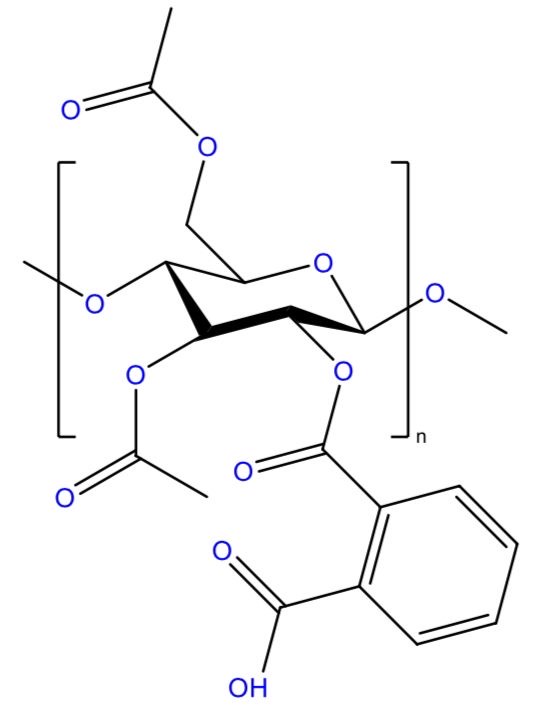
Protein binding (PB) plays an important role in the pharmacokinetics and pharmacodynamics of a drug. The extent of protein binding in the plasma or tissue controls the volume of distribution and affects both hepatic and renal clearance. In many cases, the free drug concentration, rather than the total concentration in plasma, is correlated to the effect. Drug displacement from a drug–protein complex can occur through the direct competition of two drugs for the same binding site. This process is particularly important with drugs that are highly bound (over 95%) because even a small displacement of the bound drug can significantly increase the free drug concentration in the plasma. In order to measure free fraction or PB of a drug, ultrafiltration (UF), ultracentrifugation, equilibrium dialysis (ED), chromatography, spectrophotometry, electrophoresis, etc. have been used.
Protein Binding Equilibria
We write the interaction between a group or free receptor P in a protein and a drug molecule D as:
$$ P + D ⇌ PD $$
The equilibrium constant, disregarding the difference between activities and concentrations, is:
$$ K=\frac{\left[PD\right]}{\left[P\right]\left[D_f\right]} $$
or.
$$ K\left[P\right]\left[D_f\right]=\left[PD\right] $$
where:
K: is the association constant.
[P]: is the concentration of the protein in terms of free binding sites.
[Df]: is the concentration, usually given in moles, of free drug, sometimes called the ligand.
[PD]: is the concentration of the protein–drug complex.
K varies with temperature and would be better representedas K(T); [PD], the symbol for bound drug, is sometimes written as [Db], and [D], the free drug, as [Df]. If the total protein concentration is designated as [Pt], we can write:
$$ \left[P_t\right]=\left[P\right]+\left[PD\right] $$
or.
$$ \left[P\right]=\left[P_t\right]-\left[PD\right] $$
Substituting the two expression gives:
$$ \left[PD\right]=K\left[D_f\right]\left(\left[P_t\right]-\left[PD\right]\right) $$ $$ \left[PD\right]+K\left[D_f\right]\left[PD\right]=K\left[D_f\right]\left[P_t\right] $$ $$ \frac{\left[PD\right]}{\left[P_t\right]}=\frac{K\left[D_f\right]}{1+K\left[D_f\right]} $$
Let r be the number of moles of drug bound, [PD], per mole of total protein, [Pt]; then r=[PD]/[Pt], or:
$$ r=\frac{K\left[D_f\right]}{1+K\left[D_f\right]} $$
This equation is one form of the Langmuir adsorption isotherm. Although it is quite useful for expressing protein-binding data, it must not be concluded that obedience to this formula necessarily requires that protein binding be an adsorption phenomenon. The expression can be converted to a linear form, convenient for plotting, by inverting it:
$$ \frac1r=\frac1{K\left[D_f\right]}+1 $$
If ν independent binding sites are available, the expression for r, is simply ν times that for a single site, or:
$$ r=\nu\frac{K\left[D_f\right]}{1+K\left[D_f\right]} $$
and the equation becomes
$$ \frac1r=\frac1{\nu K\left[D_f\right]}+\frac1\nu $$
This equation produces what is called a Klotz reciprocal plot.
Equilibrium Dialysis (ED) and Ultrafiltration (UF)
A number of methods are used to determine the amount of drug bound to a protein. Equilibrium dialysis, ultrafiltration, and electrophoresis are the classic techniques used. In recent years, other methods like gel filtration and nuclear magnetic resonance have also been employed with satisfactory results.
According to the equilibrium dialysis method, the serum albumin (or other protein under investigation) is placed in a Visking cellulose tubing or similar dialyzing membrane. The tubes are tied securely and suspended in vessels containing the drug in various concentrations. Ionic strength and sometimes hydrogen ion concentration are adjusted to definite values. Additionally, controls and blanks are run to account for the adsorption of the drug and the protein on the membrane.
If binding occurs, the drug concentration in the sac containing the protein is greater at equilibrium than the concentration of drug in the vessel outside the sac. Samples are removed and analyzed to obtain the concentrations of free and complexed drug.
Ultrafiltration methods are perhaps more convenient for the routine determination because they are less timeconsuming. The ultrafiltration method is similar to equilibrium dialysis in that macromolecules such as serum albumin are separated from small drug molecules. Hydraulic pressure or centrifugation is used in ultrafiltration to force the solvent and small molecules, including the unbound drug, through the membrane. Furthermore, this process prevents the passage of the drug bound to the protein. This ultrafiltrate is then analyzed by spectrophotometry or other suitable technique.
The concentration of the drug that is free and unbound, Df, is obtained by use of the Beer’s law equation.
Dynamic Dialysis
Meyer and Guttman developed a kinetic method for determining the concentrations of bound drugs in protein solutions. This method has gained popularity in recent years because it is quick, requires minimal amounts of protein, and is easily applicable to studying competitive inhibition in protein binding.
The method, known as dynamic dialysis, is based on the rate of disappearance of a drug from a dialysis cell. Moreover, this rate is directly proportional to the concentration of the unbound drug, making it a valuable technique for such measurements. The apparatus consists of a 400-mL jacketed (temperature-controlled) beaker into which 200 mL of buffer solution is placed. A cellophane dialysis bag containing 7 mL of drug or drugprotein solution is suspended in the buffer solution. Both solutions are stirred continuously. Samples of solution external to the dialysis sac are removed periodically and analyzed spectrophotometrically, and an equivalent amount of buffer solution is returned to the external solution.
The dialysis process follows the rate law:
$$ -\frac{d\left[D_t\right]}{dt}=k\left[D_f\right] $$
where:
[Dt]: is the total drug concentration.
[Df]: is the concentration of free or unbound drug in the dialysis sac.
–d[Dt]/dt: is the rate of loss of drug from the sac.
k: is the first-order rate constant representative of the diffusion process.
The factor k can also be referred to as the apparent permeability rate constant for the escape of drug from the sac.
The dynamic dialysis plot
The rate constant, k, is obtained from the slope of a semilogarithmic plot of [Dt] versus time when the experiment is conducted in the absence of the protein.
Figure1 illustrates the type of kinetic plot that can be obtained with this system. Note that in the presence of protein, curveII, the rate of loss of drug from the dialysis sac is slowed compared with the rate in the absence of protein, curve I. To solve equation d[Dt]/dt=-k[Df] for free drug concentration, [Df], it is necessary to determine the slope of curve II at various points in time. This is not done graphically, but instead it is accurately accomplished by first fitting the time-course data to a suitable empirical equation, such as the following, using a computer.
$$ \left[D_f\right]=C_1e^{-C_2t}+C_3e^{-C_4t}+C_5e^{-C_6t} $$
The computer fitting provides estimates of C1 through C6. Finally, once we have a series of [Df] values computed from equation d[Dt]/dt=-k[Df] corresponding to experimentally determined values of [Dt] at each time t, we can proceed to calculate the various terms for the Scatchard plot.
Reference:
- Sinko, P. (2011). Martin’s Physical Pharmacy and Pharmaceutical Sciences. Baltimore, : Lippincott Williams & Wilkins, a Wolters Kluwer business.